Attic Insulation Replacement
Upgrade old, degraded insulation for real comfort and savings.
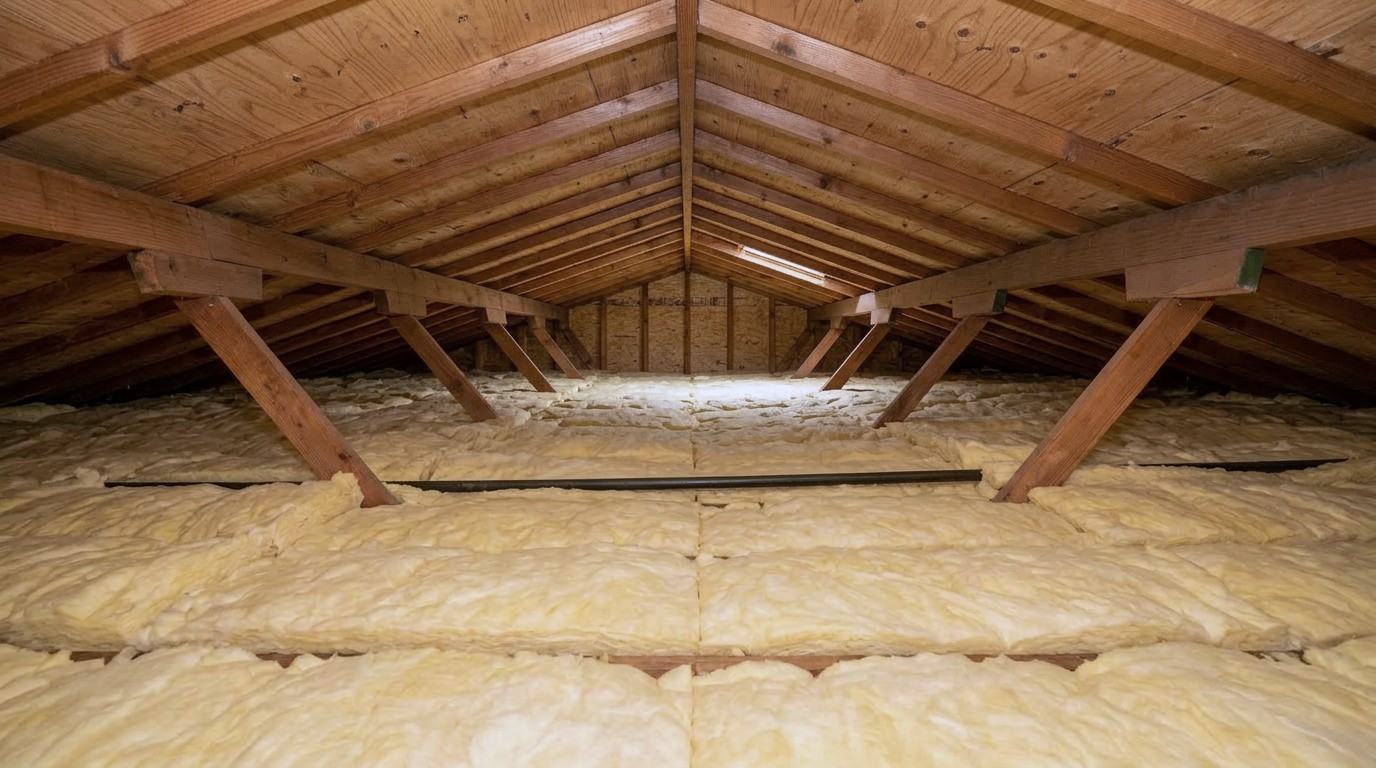
Old or compressed attic insulation loses most of its R-value. We remove degraded material and install fresh batts, blown-in, or spray foam to restore a continuous thermal barrier across your attic.
What you get
Lower energy bills, year-round
Most homes with original or compressed insulation are losing 25–40% of their conditioned air through the attic. Restoring R-value to current code keeps heated and cooled air where it belongs, so your HVAC runs less and your monthly bills drop noticeably — usually within the first billing cycle.
More even temperatures, room to room
Hot upstairs bedrooms and cold back rooms almost always trace back to a weak attic. A continuous, properly-depthed layer of insulation evens out the thermal envelope so every room sits within a few degrees of the thermostat.
Cleaner, healthier indoor air
Old insulation holds decades of dust, rodent debris, and combustion residue that drifts down into your living space through can lights and top plates. Removing it — instead of just blowing new material on top — gives you a genuinely clean attic and measurably better air below.
A code-compliant thermal barrier built to last
We install to current California Title 24 R-values using material rated for the assembly, then air-seal penetrations before the new insulation goes down. The result is a tight, continuous barrier that performs the day we leave and still performs decades from now.
How it works
- 1
On-site evaluation
We inspect your attic, measure existing R-value, and recommend the right material and depth.
- 2
Safe removal
Old insulation, dust, and contaminants are vacuumed out and hauled off.
- 3
Prep and air seal
We seal gaps, top plates, and penetrations before installing new insulation.
- 4
Installation
Fresh batts, blown-in, or spray foam installed to the recommended depth and density.
Frequently asked
How do I know if my attic needs new insulation?
Uneven room temperatures, rising energy bills, visible compression, water staining, or insulation older than 15–20 years are common signs.
How long does it take?
Most residential attics are completed in one day.