
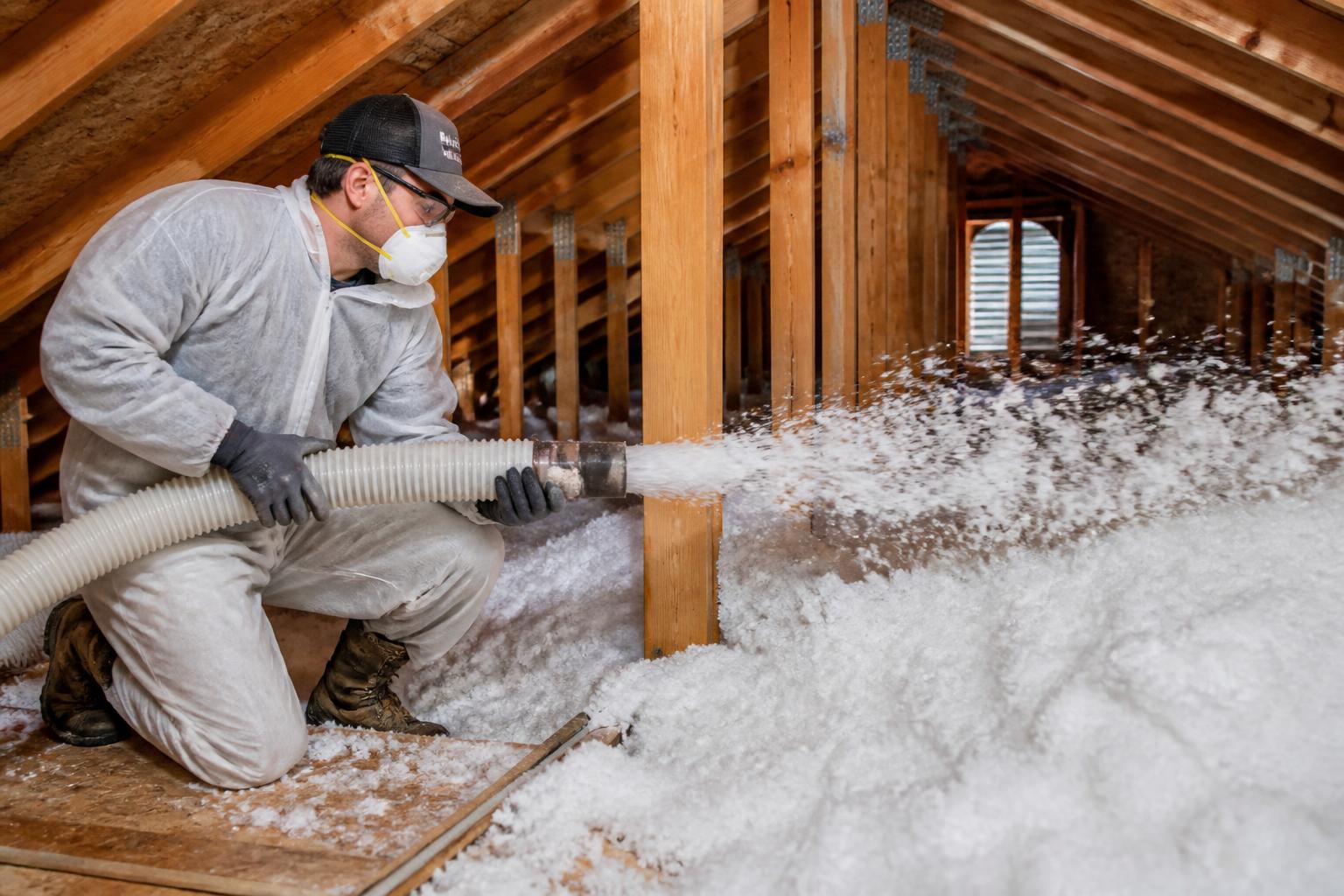
Blown-in insulation flows into every joist bay, around wiring, and into corners that batts physically can't reach. It's the fastest way to bring an attic up to modern R-values with a continuous, settle-resistant thermal layer.
What you get
Continuous coverage with no thermal gaps
Batts leave seams at every joist, light, and penetration — and every seam is a thermal bridge. Loose-fill flows around obstructions and settles into a single uninterrupted blanket, so the R-value you pay for is the R-value you actually get.
Quieter rooms below
A thick, dense layer of loose-fill across the attic floor absorbs airborne sound — rain on the roof, HVAC noise, footsteps from above. Most homeowners notice the rooms below feel noticeably calmer the same day the install wraps.
Cost-effective per R-value installed
Pound for pound, blown-in cellulose and fiberglass are the most affordable way to add real insulating depth. It's the highest-leverage upgrade for homeowners who want maximum bill savings per dollar spent.
Settles into wiring, framing, and odd geometry
Knee walls, dropped soffits, recessed-light enclosures, and irregular framing make batt installs slow and gappy. Loose-fill fills around all of it cleanly — no cutting, no compression, no missed corners.
How it works
- 1
Inspection
We measure existing depth, check for air leaks, and confirm the attic is ready for additional fill.
- 2
Air seal and prep
Top plates, can lights, and penetrations are sealed before any new material goes in.
- 3
Blow-in install
Cellulose or fiberglass blown to the depth required to hit your target R-value.
- 4
Depth verification
We mark depth rulers across the attic and walk the job with you before we leave.
Frequently asked
Cellulose or fiberglass?
Both perform well. Cellulose is denser and better at slowing air movement; fiberglass is lighter and doesn't settle as much over time. We'll recommend based on your attic.
Can you blow on top of existing insulation?
Yes — if the existing material is clean and dry, we can add depth on top. If it's contaminated or compressed, we recommend a clean-out first.